
Water Cycle
Soil water availability is the balance between inputs from precipitation and losses to the atmosphere, the surface, and the groundwater.
Leaf area index of forests in Wisconsin is positively correlated with soil water availability, and to a lesser extent with nutrient availability, as reported by Fassnacht and Gower in 1997. Soil water availability is the balance between inputs, chiefly precipitation, and losses, which include canopy interception, evaporation, transpiration, overland flow, and deep drainage.
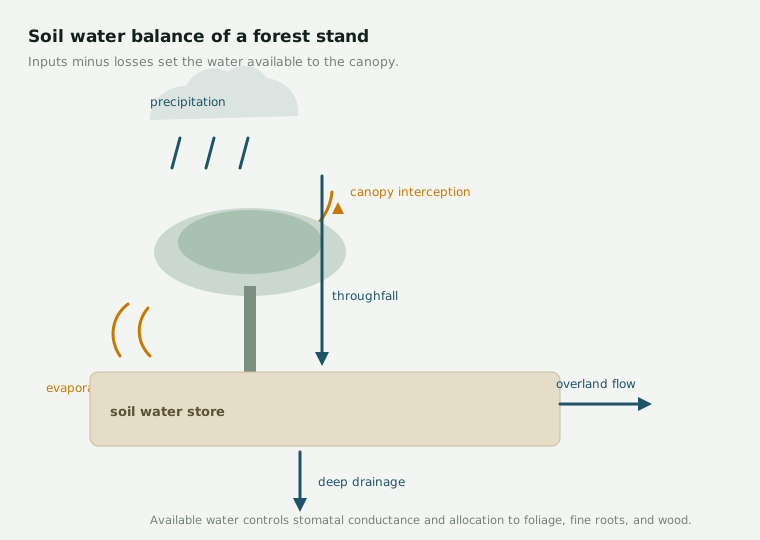
Soil water availability controls stomatal conductance and the allocation of biomass to foliage, fine roots, and wood, as described by Running and Gower in 1991. Because allocation decides where carbon ends up, the water cycle is not a side issue for a carbon model. It sits directly upstream of the Biome BGC model and of the carbon and nitrogen cycles that share the same soil.
Why the balance matters
When water is short, stomata close, photosynthesis falls, and less carbon enters the stand. When water is plentiful, the canopy can support more leaf area and absorb more light. Either way, the same five loss terms decide the outcome, and each of them can be modeled from daily weather and stand structure.