
C and N Cycles
Carbon and nitrogen move together through the litter and soil, tied by the chemistry of each litter type.
Leaf litter and fine root turnover enter the litter and soil pools through decomposition. Detritus production is the source of input into the litter pool. Nitrogen in green and carbon in black travel together, because the two are tightly coupled through the nitrogen and lignin concentration of each litter type.
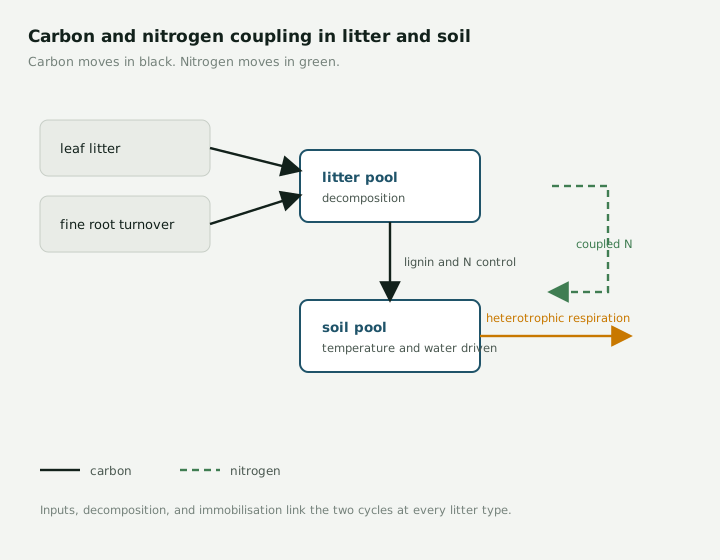
The nitrogen budget is sensitive to the nitrogen pool sizes and to the decomposition rates of nitrogen in the litter and soil. The rate at which leaf litter is incorporated into the soil pool is proportional to the leaf lignin concentration, and the balance of that litter goes to the litter compartment. The decomposition rates of the soil and litter pools are calculated as a function of the integrated daily average water fraction and a daily temperature degree day summation, both provided from the climate data.
This coupling allows more realistic modeling of the forest carbon cycles, since nitrogen limitation shapes how much new wood and foliage a stand can build from the carbon it captures. The daily water fraction that governs decomposition comes directly from the water cycle, so the two cycles share a common driver.
Temperature and water as controls
Because decomposition responds to both temperature and water, a warmer or drier climate changes not only growth but also the release of carbon from the soil. Capturing that response is part of what separates a process model from a simple accounting exercise.