
Forest Carbon Cycles
The forest carbon cycle is an aggregate of a biological forest ecosystem cycle and an industrial forest products cycle.
The forest carbon cycle combines a biological or forest ecosystem cycle with an industrial or forest products cycle. Both halves matter, and they meet at the point of harvest.
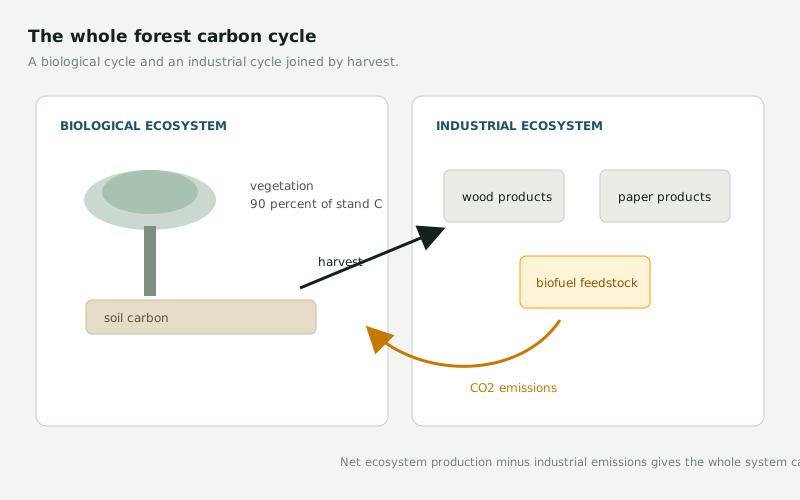
A majority of forest carbon cycle research has focused on the biological component. Forests contain a disproportionately greater amount of carbon in the vegetation, about 90 percent, and in the soil, about 80 percent, than other terrestrial ecosystems. Forest ecosystems assimilate about 67 percent of the total carbon dioxide removed from the atmosphere by all terrestrial ecosystems. Because forests are such an important component of the global carbon cycle, it is important to model the carbon cycle of the biomes of the world correctly.
The industrial half of the cycle is what turns a standing forest into wood and paper products, and it is where life cycle analysis does its work. The biological half is what Biome BGC simulates, including the carbon and nitrogen dynamics that govern long term storage.
Reading a whole system balance
Net ecosystem production describes the biological side over a period. Industrial emissions describe the products side. The difference between them is the whole system balance for a region, and it is the number that matters when the question is whether a forest and its wood economy are a net sink or a net source.